Keynotes
Keynote Speakers
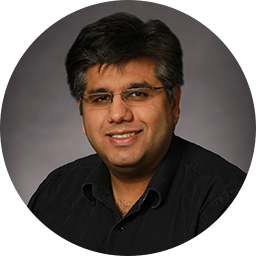
Prof. Vishal Monga, The
Pennsylvania State University, USA
IEEE
Fellow, AAIA Fellow
Speech Title: Algorithm Unrolling: Foundations, Retrospectives and Recent Trends
Abstract: The talk will introduce algorithm unrolling, a rigorous, methodical framework for designing efficient, explainable neural networks by leveraging iterative optimization approaches that have long provided the analytical foundations of machine learning, signal processing and computer vision. Applications and associated analytical results will be demonstrated in image deconvolution with a discussion of recent trends.
Biography: Dr. Vishal Monga is a faculty member in Electrical Engineering and Computer Science (EECS) at Pennsylvania State University, where he has been based since 2009. Before joining Penn State, he served as an Imaging Scientist at Xerox Research Labs and has held visiting positions at Microsoft Research and the University of Rochester. He holds a Ph.D. from the University of Texas, Austin, and completed his undergraduate studies at IIT Guwahati.
Prof. Monga’s research has earned him several distinguished honors, including the NSF CAREER Award, the Penn State Engineering Alumni Society Outstanding Research Award (2019), the PSEAS Premier Research Award (2022), and the IIT Guwahati Distinguished Alumnus Award (2022). He also received the Joel and Ruth Spira Teaching Excellence Award in 2016.
An active IEEE leader, Prof. Monga serves on multiple technical committees and has held editorial roles at leading journals including IEEE TIP, JSTSP, TCSVT, and SPL. He is a founding editorial member of Frontiers in Signal Processing and the editor of the Springer volume Handbook of Convex Optimization Methods in Imaging Science. Inducted into the National Academy of Inventors in 2022, he holds 45 U.S. patents. He is a Fellow of IEEE and of the Asia Pacific Artificial Intelligence Association (AAIA).
His research interests span Data Science, Artificial Intelligence, and Signal and Image Processing, with a focus on convex optimization methods in imaging and signal/image classification.
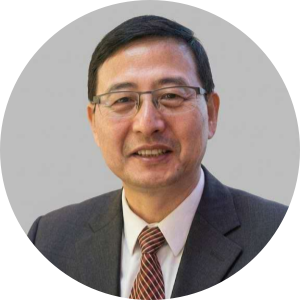
Prof. Liang Zhao, University
of São Paulo, Brazil
the Stanford/Elsevier
Top 2% Scientists List 2024
Biography:
Liang Zhao is a Full Professor in the Department
of Computing and Mathematics at University of
São Paulo. He was included in the
Stanford/Elsevier Top 2% Scientists List 2024 in
the career-long category for Artificial
Intelligence & Image Processing. He previously
served as an Associate Editor for IEEE
Transactions on Neural Networks and Learning
Systems and currently serves as an Associate
Editor for Neural Networks and IEEE Transactions
on Systems, Man, and Cybernetics: Systems. His
main research interests include complex network
theory and machine learning, particularly deep
learning, complex network-based machine
learning, GNNs, LLMs, AI agents, and AI
applications in agriculture. He has published
more than 100 journal articles, many of them in
influential journals such as Nature
Communications, IEEE TNNLS, IEEE TEC, Neural
Networks, and IEEE TKDE. In addition, he
authored the book Machine Learning in Complex
Networks, which became one of Springer's top 25%
most downloaded books in 2017. He has also
contributed to the editing of 9 books and
published more than 160 conference papers.
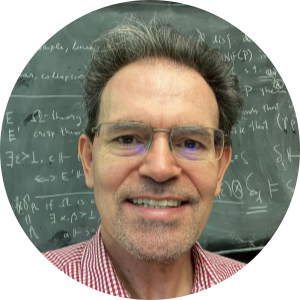
Prof. Mauricio Ayala Rincón, Brasilia University, Brazil
Invited Speakers
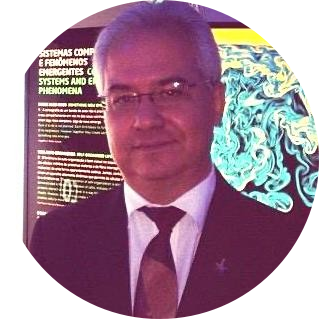
Prof. Elbert Einstein Nehrer Macau, Universidade Federal de São Paulo (Unifesp), Brazil
Speech Title: Detecting causality in coupled systems using recurrence analysis and maximum entropy principle
Abstract: In this work, it is presented a novel approach for detecting causal interactions based on the maximum entropy principle applied to recurrence microstates (RM). The method enables the estimation of conditional information transfer between coupled systems while reducing the parametric dependence inherent in the Recurrence Measure of Conditional Dependence (RMCD), thereby enhancing its robustness and effectiveness. The performance of the proposed framework across a range of systems with increasing complexity, including stochastic processes (autoregressive moving average, ARMA), discrete chaotic systems (coupled logistic and Rulkov maps), and continuous chaotic systems (Lorenz system). This method is applied , to real-world data from the COVID-19 pandemic in the three most populous Brazilian states, spanning March 2020 to December 2022. In this context, the causal influence of fluctuations in reported case numbers on subsequent deaths is investigated, providing empirical validation of the method in a realistic and socially relevant scenario.
Biography: Elbert E. N. Macau is Full Professor at the Institute of Science and Technology of the Federal University of São Paulo (UNIFESP), Brazil, and a CNPq 1A Research Productivity Fellow. His research focuses on nonlinear dynamics, synchronization, complex networks, data-series analysis, and mathematical modeling, with applications ranging from complex systems and collective behavior to artificial intelligence and computational methods.

Prof. Daniel Molina-Pérez, ESCOM, National Polytechnic Institute, Mexico
Speech Title: Noise: The Nightmare of Contrast Enhancement — Classical Techniques, Nature-Inspired Optimization, and Learning-Based Approaches
Abstract: Enhancing medical images is not only about improving contrast, but also about dealing with noise. In practice, increasing contrast often comes at the cost of amplifying noise, which can directly affect diagnostic reliability. Early methods improve contrast without explicitly accounting for this issue, while sequential approaches attempt to reduce noise and enhance contrast in separate steps. More advanced techniques introduce local, noise-aware adjustments during the enhancement process, achieving better results, although still relying on parameter tuning and limited transformation models.
Optimization-based approaches, particularly those inspired by nature, provide a way to explicitly control this trade-off, while deep learning methods learn it from data, often achieving strong performance but raising concerns such as limited controllability, hallucinations, and bias. Despite significant progress, balancing contrast and noise in a reliable and interpretable way remains a challenging problem.
Biography: DANIEL MOLINA-PÉREZ received the Ph.D. degree in Robotic and Mechatronic Systems from the Centro de Innovación y Desarrollo Tecnológico en Cómputo (CIDETEC), Instituto Politécnico Nacional, Mexico City, in 2024. He is currently a Professor-Researcher with the Escuela Superior de Cómputo (ESCOM), Instituto Politécnico Nacional. He is a member of the Artificial Intelligence and Data Science Network of the Instituto Politécnico Nacional. His research interests include evolutionary computation, multi-objective optimization, mixed-integer nonlinear programming, image enhancement, and hybrid optimization methods for solving complex engineering problems. Dr. Molina-Pérez has authored and co-authored multiple articles in indexed journals, including Swarm and Evolutionary Computation, PeerJ Computer Science, and Mathematical and Computational Applications, and has presented his work at leading international conferences such as the IEEE Congress on Evolutionary Computation (CEC). He received the Best Paper Award at the Mexican International Conference on Artificial Intelligence in 2022 and was recognized with the Outstanding Academic Performance Award at the doctoral level, reflecting his academic excellence and research contributions.

Prof. Anuranjan Misra, Noida International University, India
Speech Title: AI-Driven Digital Twin for Predictive Semiconductor Design using Hardware-in-the-Loop Learning
Abstract: The semiconductor systems we use today are very complicated which makes it really hard to predict how power they will use how well they will work and how long they will last when we are still designing them. The old tools we use to design these systems rely much on simple models that do not take into account how all the different parts of the system interact with each other and how they will work in the real world.
This is about a way of designing semiconductor systems using a digital twin that is controlled by artificial intelligence. This digital twin uses a kind of computer chip called an FPGA to test the system in real time and get data on how much power it uses how well it works and how the different parts of the system are working together. We use this data to train machine learning models that can learn how the design of the system affects how it works so we can predict what the system will be like before we even build it.
The digital twin is always getting better because it uses a loop where the artificial intelligence makes predictions we test them against data from the hardware and then the artificial intelligence makes new predictions based on what it has learned. This system uses a few kinds of machine learning including supervised learning to make predictions Bayesian methods to figure out how sure we are of our predictions and reinforcement learning to make the design better. By including rules about how the physical world works the system makes sure its predictions are realistic and stable.
Biography: Dr Anuranjan Misra is Professor & Dean at Greater Noida Institute of Technology(GNIOT), Greater Noida. He holds a Ph.D. in Computer Science & Engineering and possesses three Master's degrees in Computer Science and Engineering, Law, and Mathematics, demonstrating his multidisciplinary approach to education and research. He is EX -Chairman of Computer society of India, Ghaziabad Chapter. He is Head MSME Business Incubation-GNIOT Centre(an Initiative of Ministry of MSME, Govt. of India), Head MSME Design Centre-GNIOT Center(an Initiative of Ministry of MSME, Govt. of India), .President Institution's Innovation Council -GNIOT Centre(an Initiative of Ministry of Education, Govt. of India), Chair Unnat Bharat Abhiyan- GNIOT (an Initiative of Ministry of Education, Govt. of India), and Chair Smart Campus Cloud Network- GNIOT (an Initiative of TERRI & AICTE , New Delhi) . He has 25 years of rich experience in academics, research and industry. He has delivered more than 25 expert talks around the world. He has more than 150 publications. He has handled research funding of 6+ crores. He has Senior Member of ACM, IEEE, CSI, IACSIT, IACNG, IRACST, CSTA, ISOC, ICE, AEE, IFETS, ISMCDM, SIGSE. His research is in AI, Big Data, Cloud Computing, Data Science, and Algorithms. He is passionate about quality of higher education in India.
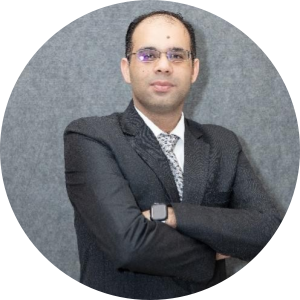
Prof. Anand Nayyar, Duy Tan University, Vietnam
Speech Title: From Copilots to Autonomous Agents: Transforming Enterprise Workflows and the Future of Knowledge Work
Abstract: Generative AI is rapidly evolving from conversational copilots that retrieve and summarize information into autonomous agents capable of reasoning, planning, acting, learning, and collaborating. This keynote explores how AI agents can transform complex enterprise workflows by combining foundation models with organizational knowledge, memory, APIs, browser interaction, orchestration, and human oversight. It introduces the spectrum of agentic systems—from tool-enabled assistants and API agents to web agents and coordinated multi-agent architectures—and explains essential patterns such as tool calling, ReAct planning, reflection, persistent memory, flow control, and maker-checker validation. The talk will demonstrate how agents can automate customer support, employee onboarding, travel and expense management, analytics, IT service operations, and other low-volume tasks that remain difficult to address using traditional scripts or robotic process automation. It will also examine emerging frameworks and evaluation ecosystems, including TapeAgents, WorkArena, BrowserGym, and AgentLab, which support traceability, optimization, reproducibility, and realistic assessment of enterprise agents. Finally, the keynote will address critical challenges involving long-horizon planning, hallucinations, multimodality, security, cost, governance, and reliability. It presents a practical roadmap for identifying valuable use cases and designing secure, efficient, human-centered agentic systems that augment workers while reshaping the future of knowledge work.
Biography: Dr. Anand Nayyar received Ph.D (Computer Science) from Desh Bhagat University in 2017 in the area of Wireless Sensor Networks, Swarm Intelligence and Network Simulation. He is currently working in School of Computer Science and Artificial Intelligence (SCA)-Duy Tan University, Da Nang, Vietnam as Professor, Scientist, Vice-Chairman (Research) and Director- IoT and Intelligent Systems Lab. A Certified Professional with 280+ Professional certifications from CISCO, Microsoft, CompTIA, Amazon, Alibaba Cloud, Oracle, Google, Salesforce, Tableau, FinOps, Beingcert, EXIN, GAQM, Cyberoam and many more. Published more than 260+ Research Papers in various High-Quality ISI-SCI/SCIE/SSCI Impact Factor- Q1, Q2, Q3, Q4 Journals cum Scopus/ESCI indexed Journals, 100+ Papers in International Conferences indexed with Springer, IEEE and ACM Digital Library, 75+ Book Chapters in various SCOPUS/WEB OF SCIENCE Indexed Books with Springer, CRC Press, Wiley, IET, Elsevier with Citations: (Google Scholar): 25200+, H-Index: 80 and I-Index: 337; (Scopus): 15000+; H-index: 64. Member of more than 60+ Associations as Senior and Life Member like: IEEE (Senior Member) and ACM (Senior Member). He has authored/co-authored cum Edited 85+ Books of Computer Science. Associated with more than 600+ International Conferences as Programme Committee/Chair/Advisory Board/Review Board member. He has completed 3 Research Grant Projects (1 Grassroot, 1 ASEAN Project and 1 Glocal-30 (Viet Nam-Korea Research Project)). He has 18 Australian Patents, 16 German Patents, 4 Japanese Patents, 46 Indian Design cum Utility Patents, 13 UK Patents, 1 USA Patent, 3 Indian Copyrights and 2 Canadian Copyrights to his credit in the area of Wireless Communications, Artificial Intelligence, Cloud Computing, IoT, Healthcare, Drones, Robotics and Image Processing. He has guided more than 200+ Undergraduate Students (B.S. Degree), 30 MCA, 7 M.S. Students and completed 1 Ph.D Student and currently 3 Ph.D Scholars and 2 PostDoc Candidates are working under him. Awarded 58 Awards for Teaching and Research—Young Scientist, Best Scientist, Best Senior Scientist, Asia Top 50 Academicians and Researchers, Young Researcher Award, Outstanding Researcher Award, Excellence in Teaching, Best Senior Scientist Award, DTU Best Professor and Researcher Award- 2019, 2020-2021, 2022, 2022-2023, 2023-2024, 2024-2025, Distinguished Scientist Award by National University of Singapore, Obada Prize 2023, Lifetime Achievement Award 2023, 2024; Asian Admirable Achievers 2024; Distinguished Academic Leader 2024, Lifetime Achievement Award 2024 and many more.
He is listed in Top 2% Scientists as per Stanford University (2020, 2021, 2022, 2023, 2024, 2025), Ad Index (Rank No:1 Duy Tan University, Rank No:2 Computer Science in Viet Nam) and Listed on Research.com (Top Scientist of Computer Science in Viet Nam- National Ranking: 2; D-Index: 64; World Ranking: 2555).
He is acting as Associate Editor for Computer Communications (Elsevier), International Journal of Sensor Networks (IJSNET) (Inderscience), Tech Science Press- IASC, Human Centric Computing and Information Sciences (HCIS), IEEE Transactions on Artificial Intelligence (IEEE TAI), Indonesian Journal of Electrical Engineering and Computer Science, IJISP, IJDST, IJCINI, IJGC, IJSIR, IJBDCN, IJSI, IJIES, IJKSS. He has reviewed more than 5700+ Articles for diverse Web of Science and Scopus Indexed Journals. He is currently researching in the area of Wireless Sensor Networks, Internet of Things, Swarm Intelligence, Cloud Computing, Artificial Intelligence, Drones, Blockchain, Cyber Security, Healthcare Informatics, Big Data and Wireless Communications.
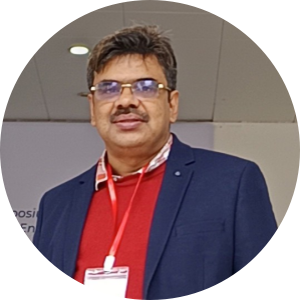
Prof. Pijush Samui, National Institute of Technology Patna, India
Speech Title: Application of Hybrid Artificial Intelligence in Engineering application
Abstract: The traditional AI does not give always good performance for large scale problems due to the use of traditional optimization techniques. Hnece, modofication of AI is required. Metaheuristic optimization is used to solve the problem. The desired sollution is defined in metaheurstic optimization. The metaheuristic optimization based AI is called hybird AI. Various metaheuristic optimization techniques{ Particle Swarm Optmization(PSO); Grey Wholf Optimization(GWO); Artificial Bee Colony (ABC); Ant Colony Optimization(ACO);) based different AI techniques will be discussed for solving different enginnering problems. The advanctegs of Metaheuristic optimization based AI over traditional AI will be discussed. The working procudre of hybid AI will be discussed in detail.
Biography: Pijush Samui is working as a professor in civil engineering department at NIT Patna, India. He graduated in 2000, with a B. Tech. in Civil Engineering from Indian Institute of Engineering Science and Technology, Shibpur, India. He received his M.Sc. in Geotechnical Earthquake Engineering from Indian Institute of Science, Bangalore, India (2004). He holds a Ph.D. in Geotechnical Earthquake Engineering (2008) from Indian Institute of Science, Bangalore, India. He was a postdoctoral fellow at University of Pittsburgh (USA) (2008-2009) and Tampere University of Technology (Finland) (2009–2010).
Dr. Samui has over 14 years of research, teaching, and consulting experience within the broad fields of civil, geotechnical, materials, earthquake, and reliability/risk analysis. His research expertise includes: (1) Liquefaction of soils, and Lateral spreading; (2) Reliability and risk analysis of structure; (3) Artificial intelligence in civil engineering problem; (4) Disaster mitigation; and (5) site characterization. His research is funded by the Department of Science and Technology (DST), Board of Research in Nuclear Science (BRNS), Indira Gandhi Centre for Atomic Research (IGCAR), several prominent state and local government agencies, and industries. His research includes laboratory studies, field experiments, and computer modeling, ultimately leading to fundamental advances and practical solutions to the real-world problems.
Dr. samui is the author of five major books: (1) Handbook of Neural Computation, (2) Integrating Disaster Science and Management Global Case Studies in Mitigation and Recovery, (3) Modeling in Geotechnical Engineering, (4) Handbook of Probabilistic Models, and (5) Risk, Reliability and Sustainable Remediation in the Field of Civil and Environmental Engineering. He is also author of 225 journal papers, 14 edited books, and 34 book chapters (with h-index of 43 with over 5600 citations). Dr. Samui has given invited presentations in various countries.
Dr. samui has served or currently serves as an Associate Editor or Editorial Board Member of over 10 different journals, including Innovative Infrastructure solution, international journal of geotechnical earthquake engineering, among others. He has also served on various professional committees, including the Indian Geotechnical Society (IGS) and TC member of Machine learning and BIG Data of ISSMGE.
Dr. Samui has received several awards for excellence in research and teaching, including IIT Roorkee Shamsher Prakash Research Award, IGS – Sardar Resham Singh Memorial Award, IACMAG Excellent Regional Contributions Award. He is a fellow of Indian Society of Earthquake Technology (ISET). He is guest professor at University of Science and Technology, Beijing. He is also Title of Docent at Tamper University. He was Adjunct Professor at Ton Duc Thang University (Vietnam)(2018-2021).
Assoc. Prof. Suraya Masrom, Universiti Teknologi Mara, Malaysia
Speech Title: Genetic Programming Based Automated Machine Learning
Abstract: Automated Machine Learning (AutoML) has emerged as a promising approach for solving classification and prediction problems, and continues to attract significant attention for further enhancement. One notable advancement in AutoML is the integration of evolutionary algorithms, particularly Genetic Programming (GP). GP facilitates the optimisation of machine learning pipelines by exploring and selecting the best combinations of algorithms and their corresponding hyperparameters.
As an evolutionary-based technique, the performance of GP in generating optimal pipelines is highly dependent on its parameterisation, especially mutation and crossover rates. This study investigates the effects of different combinations of mutation and crossover rates on AutoML performance across diverse datasets. The findings provide empirical insights supporting the notion that higher crossover rates tend to improve model accuracy, while lower crossover rates may lead to premature convergence.
In addition, this work introduces a novel software tool designed for the rapid implementation of GP-based AutoML, aimed at enhancing accessibility for non-expert users. This tool facilitates efficient experimentation and broadens the applicability of AutoML in various domains.
Biography: Suraya Masrom holds a Bachelor's Degree in Computer Science (Software Engineering) from Universiti Teknologi Malaysia and a Master's Degree in Computer Science from Universiti Putra Malaysia. She began her professional career in the industry as an Associate Network Engineer at Ramgate Systems Sdn. Bhd. in 1996. Following her postgraduate studies, she transitioned into academia as a full-time lecturer at Universiti Teknologi Malaysia, where she successfully completed two university-funded research projects within her first three years of service. In 2004, she joined Universiti Teknologi MARA (UiTM), Seri Iskandar, Perak, where she continues to serve as an academic in the field of Computer Science. Throughout her tenure at UiTM, she has led and contributed to more than 20 research projects funded by internal, national, international, and industry grants with a total value approaching RM1 million. Dr. Suraya is also actively engaged as a consultant in software systems and has contributed her expertise to various agencies, particularly in smart city planning and development initiatives. She has authored and co-authored over 100 publications in indexed journals, demonstrating her strong research impact. In addition to her research and consultancy roles, she has served as the Chief Editor of the Mathematical Sciences and Informatics Journal, and was honoured with the Best UiTM Journal Editor Award in 2021 in recognition of her editorial excellence.rmatic Journal and has been awarded as the the best UiTM Journal Editor in 2021.
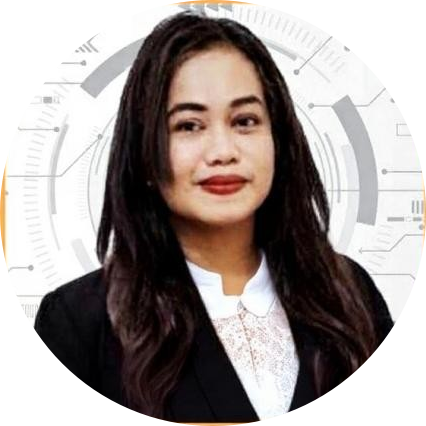
Assoc. Prof. Jennifer O. Contreras, De La Salle University, Philippines
Speech Title: Ontology Learning in Disaster Risk Management Using a Hybrid SVM–Transformer Deep Learning Kernel
Abstract: Support Vector Machine (SVM) is a supervised learning algorithm widely used for classification tasks and capable of handling complex data through kernel functions. In ontology learning, SVM can classify concepts and relationships; however, traditional SVM kernels often struggle to capture deep contextual and semantic meanings in Disaster Risk Management (DRM) texts. This limitation may lead to inconsistent knowledge representation, reduced situational awareness, and suboptimal decision-making during mitigation, preparedness, response, and recovery phases.
To address this challenge, the study developed a hybrid SVM–Transformer Deep Learning (SVM-TDL) model that integrates neural projection learning and transformer-based contextual embeddings into the SVM framework. A curated DRM dataset was constructed from policy documents, hazard reports, research articles, and operational manuals. Domain-adapted BERT embeddings were generated and refined through a neural projection layer to form a transformer-informed neural kernel for SVM classification. The proposed hybrid model was evaluated against a classical SVM and a linear baseline using accuracy, F1-score, confusion matrices, kernel heatmaps, and conceptual cluster visualizations.
Experimental results demonstrated that the hybrid SVM-TDL model achieved 86.00% accuracy in ontology concept classification and 98.83% accuracy in relationship classification, significantly outperforming classical SVM (84.7% accuracy, 84.2% F1-score) and a linear baseline (78.9% accuracy). Misclassification among semantically similar DRM concepts—such as hazard, impact, exposure, and event was reduced by up to 35%, indicating improved non-linear separability and richer semantic discrimination. Kernel heatmaps and conceptual cluster visualizations further confirmed clearer and more stable boundary formation across concept classes. In addition, the hybrid model achieved improved computational efficiency, with time and space complexity O(n·d), substantially lower than the O(n²·d) and O(n²·d·p) complexities of RBF and polynomial kernels, enabling better scalability for large datasets. These findings indicate that integrating neural projection learning with Transformer-based representations substantially enhances SVM performance in DRM ontology learning. The resulting improvements contribute to more coherent ontologies, more transparent inter-agency communication, and more accurate decision-making across preparedness, response, mitigation, and recovery phases.
The generated ontology was validated in Protégé and deployed as the knowledge base for a DRM chatbot integrated with Large Language Models (LLMs) and Retrieval-Augmented Generation (RAG) to enhance contextual response generation and information retrieval.
Biography: Dr. Jennifer Contreras is the founder of JOCTech ICT Consultancy and Training Services and a faculty member in the Department of Software Technology at De La Salle University - Manila. With over two decades of experience in academia, she had the privilege of teaching and connecting with students from diverse backgrounds across the globe (Libya, Sudan, Malaysia, Sweden, and the Philippines). This journey has exposed her to a rich array of beliefs, cultures, and educational backgrounds among her students.
She earned her Ph.D. in Information and Communication Technology from Al Madinah International University in Malaysia with the dissertation study entitled, “Automated Question Generator for Automated Essay Scoring System using Ontology and Natural Language Processing”. Now, she is currently finishing her Ph.D. in Computer Science, a dissertation study at the Technological Institute of the Philippines-Manila entitled, “Hybrid Support Vector Machine–Transformer Deep Learning Kernel Approach for Ontology Learning in Disaster Risk Management”. Her research interests focus on Artificial Intelligence, Machine Learning, Natural Language Processing, Data Mining, and Data science. Within these domains, she has already published various papers in collaboration with different researchers from both local and international backgrounds. Her solid foundation was further enhanced through multi-disciplinary research when she took charge as Director at the Innovation and Research Development Center, where she managed various projects and initiatives to drive innovation and advance the organization's research goals. Dr. Contreras has also served as Faculty Member at Linnaeus University (Sweden) and Al-Madinah International University, and previously as Project Development Officer IV at the Department of Information and Communications Technology (DICT), where she led MOOC and LMS initiatives for national digital upskilling. Her current DOST-MIRDC funded research focuses on predicting thermal properties of 3D-printed materials through data mining to promote sustainable manufacturing. Widely published in IEEE and international journals, she advocates for the ethical and inclusive use of AI in education, research, and public service, empowering learners to thrive in a technology-driven world.
Reasons to Join CTML 2026
- Access cutting-edge insights from world-renowned keynote speakers and technical sessions on computational theory and machine learning.
- Share your original research with a global academic audience and receive professional feedback from field experts.
- Expand your academic and industrial network by connecting with researchers, scholars, and practitioners worldwide.
- Enhance your research visibility and academic profile through formal publication and presentation at an international conference.
Rio de Janeiro, Brazil
Rio de Janeiro blends iconic landmarks, natural beauty, and lively culture. Don't miss Christ the Redeemer, Sugarloaf Mountain's cable car, and the golden sands of Copacabana and Ipanema for an unforgettable Brazilian experience.

Christ the Redeemer & Corcovado Mountain
Visit the iconic New Seven Wonders statue, take the cog train through Tijuca Forest, and enjoy 360 degree city views.

Sugarloaf Mountain Cable Car
Ride the historic cable car to the summit for stunning sunset views over Guanabara Bay and Rio's skyline.

Copacabana & Ipanema Beaches
Relax on world-famous shores, stroll the promenade, and soak up Rio's vibrant beach culture.